Ian's Blog | Leather



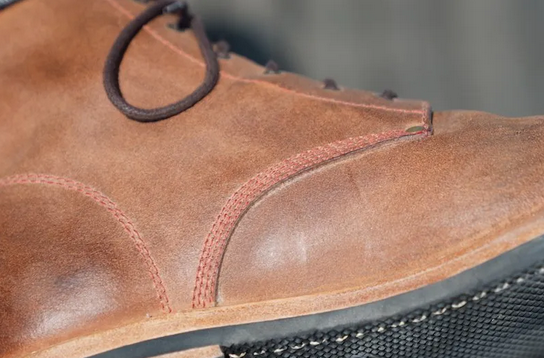
In this post, I will only talk about cow leather. There are so many different types of leather out there that I really should just focus on the most common and ubiquitous leather out there.The first and foremost common leather is calf leather. There are other cow leathers taken from older or younger cows, but calf leather is in the goldilocks zone of price, lack of blemishes, and yield per cow.
There are two main labels you should know about. Full grain leather, is the entire thickness of the hide, from top to bottom. In the anatomy of cow hide, you have the smooth skin on the outside, and you have the rough interior. It attaches to the... Muscle and fat membranes so it's much rougher, but on the exterior you have the hair, right? It's a lot smoother and that is most prized for example, when it comes to shoes and belts that is this Full grain leather which is most prized.
Top grain leather is another high quality of leather where, the lower quality leather on the bottom, (they call it the splits), is cut out/shaved off, and just the top part is used. It's another way to get more product out of a given hide. The splits, as it is called, can be used to make many different types of leather. These alternatives are leather products such as suede leather, nubuck leather, and rough-out leather. Most of these save nubuck are all different leathers that use the interior of the hide, not the exterior where the hair is. They tend to be more sensitive to stains and water, but they have a really nice casual look that people really love. You can't polish them and they're more challenging to maintain. nubuck leather, which has traditionally been made using deer hide, hence the name buck inside of it, is actually made by taking full grain leather and sanding it down through the top.
Genuine leather also known as bonded leather, and there's some other terms for it is used in cheaper leather products. It is environmentally friendly, just like the lumber industry uses MDF and particle board, it minimizes waste and maximizes output. It doesn't make for the best quality products, however, there are a few niches where it does make sense, and where it is better than, let's say, cardboard for example. I know for one that some quality shoemakers use bonded leather in their heel stack in order to make the product more affordable for customers while not jeopardizing the integrity of the shoes construction.
All the same, knowing these few terms, and getting a feel for what these look like, such as in the photos below will get you a long way towards being able to purchase quality leather or at the very least not getting ripped off and paying top dollar for poor quality.
Corrected grain leather is another leather a small step up from bonded. It its a whole leather but is made with more scarred hides and uses lower parts of the hide too blemeshed for other use. It is sanded down and coated in a synthetic material which hides the real grain. The biggest problem with it is that is cannot be well maintained with polish and conditioners. This is similar to how you can't rub wood polish into an ikea shelf covered in plastic, but worse since leather dries out, cracks and wrinkles over time and use.
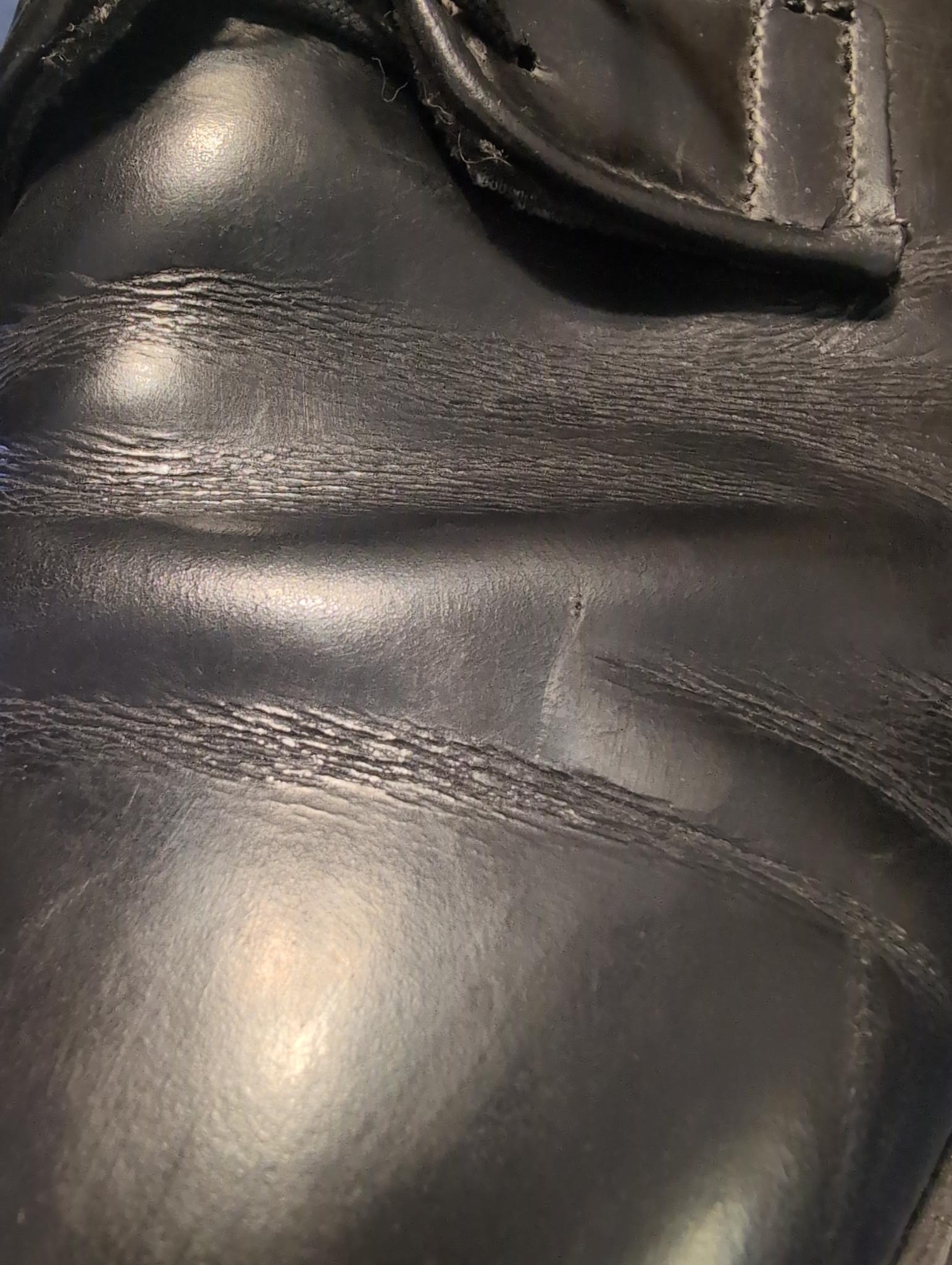
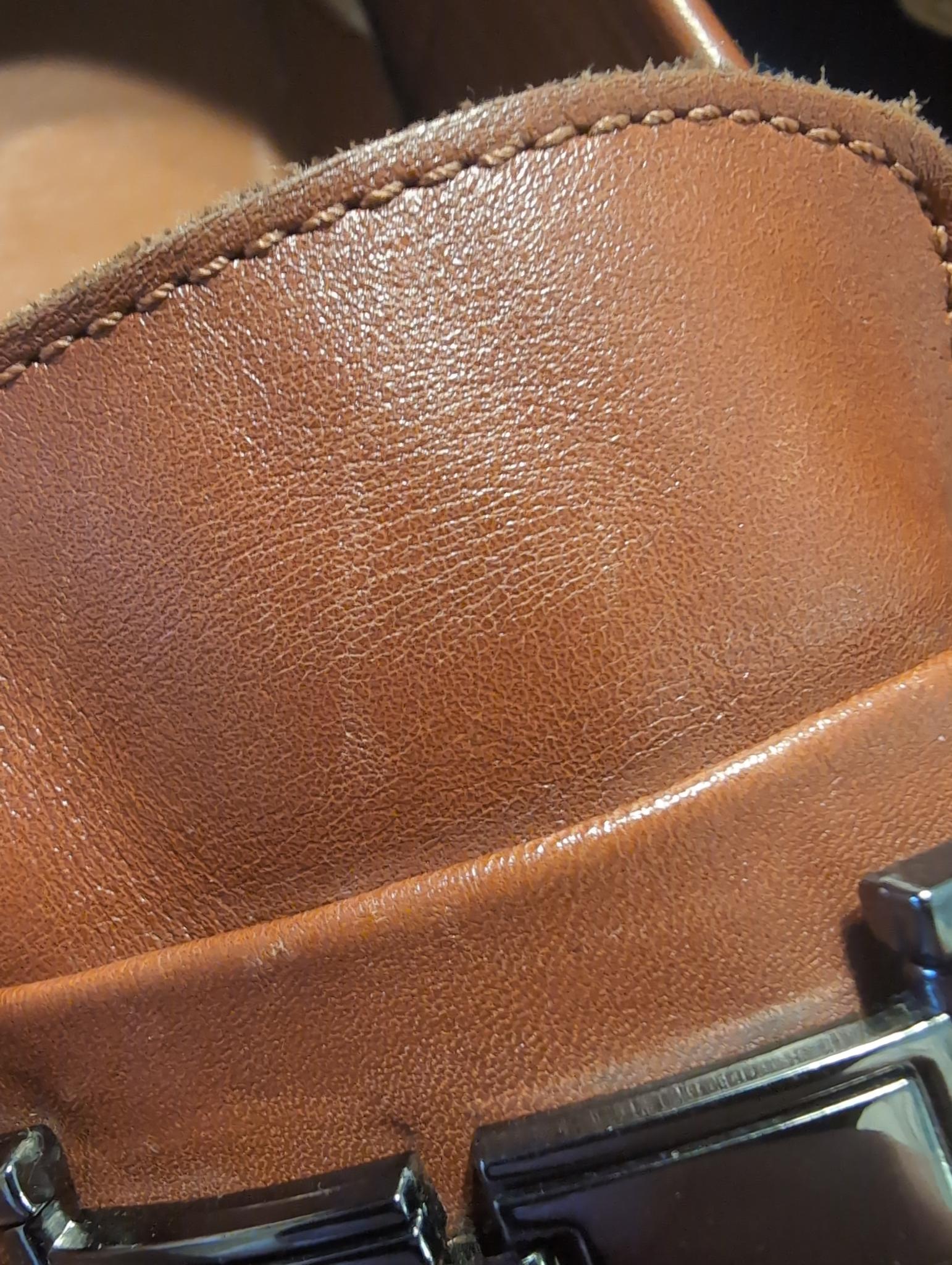
As you can see in the above photos, the shoe in the left/top is ultra smooth and you cannot see any pores or imperfections, a hallmark of corrected grain leather. The creases in the shoe alsol have a certain quality to them, up close its as if you can see the layer of coating atop the leather bubble up and crack.
On the contrary, with the shoe on the right/bottom, you can vividly see the grain, pores, and natural texture of the skin.